
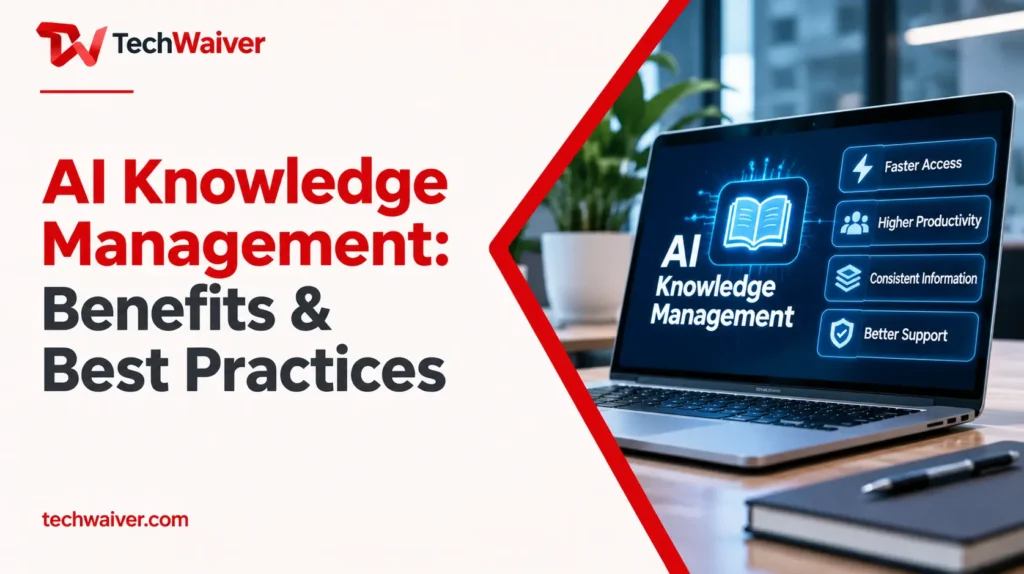
There are countless amounts of data being generated by companies on a daily basis. This may consist of customer dialogue, employee documents, product descriptions, training modules, and reports, among others. The trouble is that getting to the required data is not always an easy task.
The good news is that AI knowledge management will do the job. This involves the use of artificial intelligence in organizing the company’s data, understanding the question and providing the correct answer without needing to look through several documents.
AI does not replace the current knowledge management system but rather increases its usability. Let us see how it works, what its key advantages are, and proper practices for using it.
How Does AI Knowledge Management Work?
AI knowledge management software applies various techniques to understand and access information. The techniques vary from one platform to another, but here are some of the techniques used.
1. Gathering of Information
This is the initial stage where gathering of information is involved. There could be some useful information that a company has within its PDF files, emails, spreadsheets, customer support tickets, wiki pages, and other directories.
The AI tool is then used to connect to all of these and gather information, which enables employees to access it from one place without accessing several platforms.
2. Organization and Processing of Data
After gathering information, AI technology organizes data and enables it to be searchable. AI helps in organizing and processing information, whereby it identifies various subjects, recognizes similar data, and adds necessary categories or labels.
It allows the company to classify all documents on matters like employee training, customer service, product information, and corporate policy.
3. Understanding Queries
AI utilizes NLP to understand the meaning of the question regardless of whether the wording matches the original document.
An employee who wants to know how to request time off can find a document called “Employee Leave Application Process.”
4. Finding and Generating Responses
Following this step, the system will search for relevant information from the company’s knowledge resources. Many of the current platforms use RAG, where it first retrieves the information before answering the question.
Using the retrieved information, AI will generate responses using simple language. The platform may also provide references to the source where the information was obtained.
5. Updating Information
Companies regularly update their information on various issues like policies, products, and working procedures.
AI can help to spot the outdated documents, information gaps, and repetitive queries. Nevertheless, employees should still review the updates before giving their final approval.
Benefits of AI Knowledge Management
Using AI for knowledge management can improve how teams handle information and complete everyday tasks. Here are some of its main benefits.
Faster Access to Information
Employees no longer need to spend time opening multiple files to find a simple answer. They can ask a question and receive relevant information through an AI-powered search system.
This is particularly useful for customer support, HR and IT teams that regularly handle similar questions.
Better Team Productivity
When employees can find information quickly, they can spend more time on their actual responsibilities. AI can also summarize lengthy documents, prepare quick explanations and reduce repetitive searches.
For example, a new employee can use an internal knowledge assistant to understand company procedures without repeatedly asking colleagues for basic information.
Consistent Information Across Teams
Different departments sometimes provide different answers to the same question. This can happen when employees use old documents or rely on information shared through informal conversations.
A centralized knowledge management platform helps teams access the same approved information. It can also make it easier to identify conflicting documents.
Easier Employee Training
New employees often need time to understand company policies, tools and daily processes. AI knowledge systems can help them find training materials and get answers when questions arise.
Instead of reading an entire handbook, an employee can search for a specific process and review the relevant instructions.
Improved Customer Support
Customer support teams can use AI to find answers from product guides, previous support tickets, and company policies. This helps agents respond to common questions more quickly.
Some systems also power customer-facing chatbots that provide answers without requiring customers to contact a support representative.
Best Practices for Implementing AI Knowledge Management
Getting the right software is just a small step in this process. It is also necessary to be ready in terms of organizing information and determining how the employees will interact with the technology.
1. Begin with Structured Information
The AI will not give relevant results if the information is old, incomplete, or even wrong. Before connecting multiple sources, review the existing information and get rid of extra copies.
Identify the key policies and procedures that need to be owned by someone responsible for updating them.
2. Pick the Right Tools
Different businesses have different needs. Some need an AI-based system that would allow searching for the documents internally, some may need a tool for customer service, or for employee training.
Compare knowledge management tools according to search abilities, integration capabilities, security measures, and usability. Check if they integrate with the platforms that your employees use.
3. Determine Access Permission
Not all employees need access to all documents in the company. Financial data, employee information, and other business-related documents might require special permission to access them.
Define permissions in advance. The AI should access only those documents that a user has permission to view.
4. Update the Information
Ensure there is someone responsible for reviewing important documents. Eliminate outdated instructions and update your policies when any changes happen in the business process.
This will help you avoid situations where the AI would give an answer based on outdated information.
5. Test the System before Launch
Test the platform by posing questions that the employees might ask. Evaluate whether it can provide the correct documents, proper answers, and links to credible sources.
Ask some questions without answers as well. A decent system should be able to indicate that the answer is missing instead of creating one out of thin air.
6. Monitor the Performance
After you launch your system, analyze how the employees are using it. Look through the questions that were not answered, search queries, users’ comments, and incorrect answers.
Popular AI Knowledge Management Tools
Several platforms offer features that help businesses organize and access information.
- Notion AI: Helps teams search, summarize, and work with information stored in their Notion workspace.
- Guru: Provides company knowledge management and AI-powered search for internal information.
- Glean: Helps employees find information across connected workplace applications.
- Confluence: Offers team documentation and collaboration features, with AI capabilities through Atlassian Intelligence and Rovo.
- Zendesk Knowledge: Helps customer support teams manage knowledge and provide answers through support channels.
The right knowledge management platform depends on the size of your business, existing software, and the type of information you want to manage.
Conclusion:
The implementation of AI into the knowledge management of a company makes its information accessible and usable. For example, AI can save the time of searching for documents, increase the productivity of employees, and even give more consistent answers to customers.
AI is only effective if the information is reliable in the company, access rights are properly regulated, and the answers produced by it are controlled.
Its main purpose is to make business information easier to organize, find and use. It helps employees access relevant answers without searching through multiple documents and platforms.
Traditional systems often depend on manual organization and keyword searches. AI-powered systems can understand natural language questions, find information based on meaning, and generate direct answers from relevant sources.
Popular options include Notion AI, Guru, Glean, Confluence, and Zendesk Knowledge. Each offers different features, so businesses should compare them based on their requirements.
Yes. Small businesses can use AI to organize employee guides, customer information, product documents, and internal procedures. They can start with a simple system and expand it as their information needs grow.